Push pull legs split: how it works, with a sample week
A push pull legs split divides the week into three sessions: push, pull and legs. The exercises in each session, the six-day sample week, the volume it gives you, and who the split is really for.
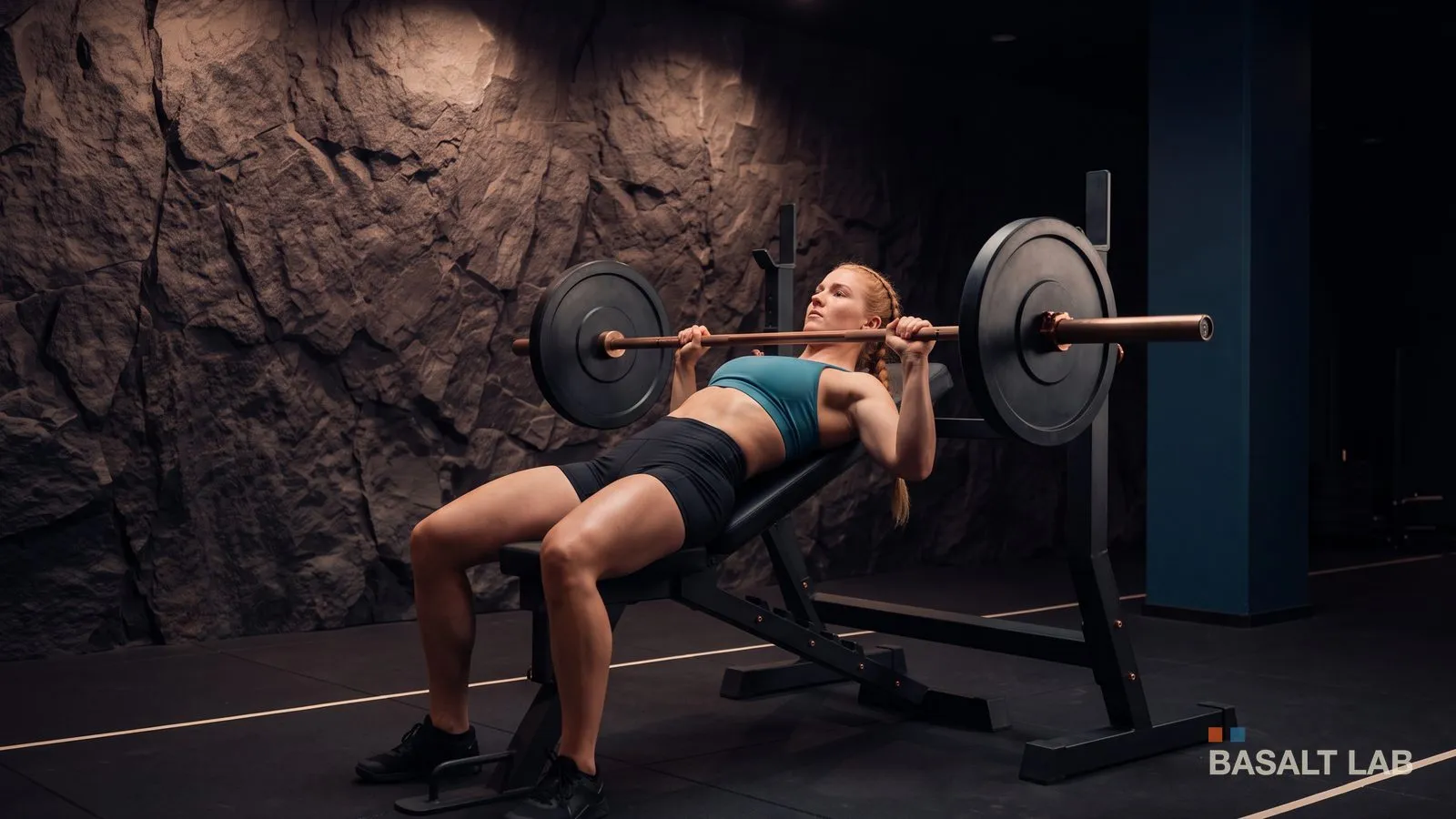
A push pull legs (PPL) split sorts your exercises into three sessions: Push for everything that pushes (chest, shoulders, triceps), Pull for everything that pulls (back, biceps, rear delts), and Legs. Run twice a week, so six sessions, it trains every muscle twice. It is a split for intermediate lifters who can train often, not a starting point.
People like PPL because it makes sense: muscles that work together are trained on the same day, and a muscle tired from yesterday rests while the others work. The real question is how many sessions you can keep up, because that number decides whether PPL is a good fit for you.
What goes into each session
Each session groups the muscles involved in the same kind of movement. A bench press already works your triceps and front delts; training them on the same day avoids hitting them two days in a row.
Push. Chest, shoulders and triceps. A heavy press opens the session, a second press follows at another angle, then shoulders and triceps in isolation.
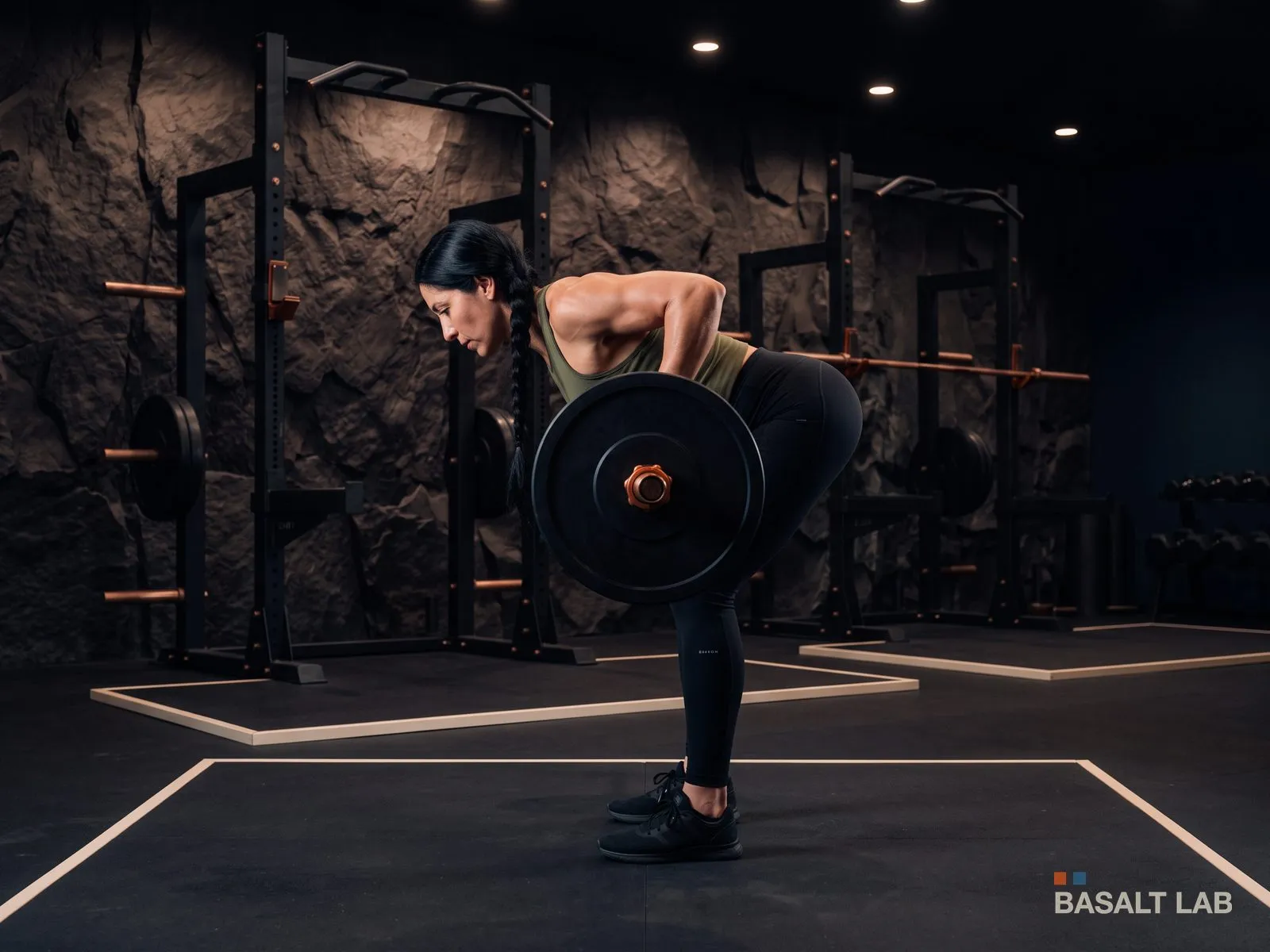
Pull. Back, biceps and rear delts. A horizontal pull, like the barbell row, and a vertical pull, like the pull-up or the lat pulldown, form the core of the session.
Legs. Quads, hamstrings, glutes and calves. A squat or a leg press for the front of the thigh, a hip hinge for the back.
The six-day sample week
The classic version runs the three sessions, runs them again, and keeps one rest day. Each muscle comes back three days after its last session, which leaves time to recover.
Six sessions is a lot. If your week only holds four, rotate the three sessions without resetting on Monday: Push, Pull, Legs, Push, then Pull, Legs, Push, Pull the following week. Each muscle comes back roughly every four or five days.
The program, session by session
The rep ranges follow a simple logic: fewer reps on the big lifts early in the session, more on isolation work at the end. Rest follows the same logic, longer on the first exercises, as covered in rest between sets.
Push
| Exercise | Sets | Reps |
|---|---|---|
| Bench press | 3 | 5 to 8 |
| Overhead press | 3 | 6 to 10 |
| Incline dumbbell press | 3 | 8 to 12 |
| Lateral raise | 3 | 12 to 15 |
| Cable triceps extension | 3 | 10 to 15 |
Pull
| Exercise | Sets | Reps |
|---|---|---|
| Bent-over barbell row | 3 | 6 to 10 |
| Pull-up or lat pulldown | 3 | 6 to 12 |
| Seated cable row | 3 | 10 to 12 |
| Face pull | 3 | 12 to 15 |
| Dumbbell curl | 3 | 10 to 15 |
The barbell row is done bent over, back flat, pulling the bar toward your lower stomach. If your back rounds, or your torso comes up on every rep to help, the weight is too heavy.
Legs
| Exercise | Sets | Reps |
|---|---|---|
| Squat | 3 | 5 to 8 |
| Romanian deadlift | 3 | 6 to 10 |
| Leg press | 3 | 10 to 12 |
| Leg curl | 3 | 10 to 15 |
| Standing calf raise | 3 | 12 to 15 |
The conventional deadlift can replace the Romanian version every other session. Keep everything else the same from week to week: repeating the same exercises is how you see whether the weight is going up.
The volume it gives you
Over six days, this program puts each major muscle group at around 12 to 18 sets a week: twelve for chest and quads, more for the back. That is the middle of the useful range of 10 to 20 sets per muscle per week, which explains why PPL is so popular with lifters who already have a few years behind them.
Over three days, each session once, the volume halves: six to nine sets per muscle. That is the bottom of the range, and that is where PPL loses out to full body, which trains each muscle three times for the same number of sessions.
Frequency itself matters less than people say. A 2016 meta-analysis found an advantage to training a muscle twice a week rather than once, at equal volume. A larger analysis of 25 studies later found no clear difference between frequencies as long as weekly volume is the same. What makes the difference is the total number of hard sets across the week; two sessions per muscle simply let you spread them out without endless workouts.
How to progress on it
Same rule as any program: stay on the same weight until you reach the top of the rep range on every set, then add the smallest jump available. The full method is in when to add weight, and the plate calculator tells you what to load on the bar.
With six sessions, each exercise comes back twice a week, which gives you two chances to beat last time. On the big lifts, do not try to go up every session: one increase a week on the bench press or the squat is already a very good pace for an intermediate lifter.
Fatigue builds faster than on a three-day full body. Plan a deload week every four to eight weeks, or as soon as your weights drop on several exercises.
Who PPL is a good fit for
PPL works if you have been training for at least six months to a year, can keep up four to six sessions a week, and your volume per muscle no longer fits in a one-hour full body session. Those are the criteria laid out in full body or split.
If you are starting out, or can only train three times a week, the beginner full body program will do better. And if four sessions is your ceiling, an upper and lower split spreads the work more evenly than a rotating PPL.
One last, practical criterion: a missed session costs more on PPL. On full body you still trained everything; on PPL, skipping Legs leaves your legs with nothing for several days. Pick this split if your schedule is stable.
Frequently asked questions
Is a three-day PPL enough?
To maintain, or to try the split, yes. To progress as well as you can, it is borderline: each muscle trains once a week, with six to nine sets. At three sessions, full body gives every muscle more work for the same time in the gym.
Can a beginner follow a push pull legs program?
They can, but they lose out. Beginners progress by repeating the same movements often, and a squat done three times a week on full body is learned faster than a squat done twice on PPL. Keep PPL for when your progress slows down.
What order should the three sessions go in?
Push, Pull, Legs is the most common order, and it separates muscles that work together well. Some lifters put Legs between Push and Pull to space out the two upper body sessions. Both work; keep the order that fits your week.
Where do abs and calves go?
Calves go in the Legs session. Abs can be added at the end of any session, two or three times a week, with a few sets of planks or leg raises.
Can you run the same session two days in a row?
No: the point of PPL is to rest the muscles from one session while the other two are trained. If you have to skip a day, shift the whole rotation rather than repeating a session.
Three logical sessions, twice a week, and the weight going up: PPL asks for nothing more.
Sources
- Effects of Resistance Training Frequency on Measures of Muscle Hypertrophy: A Systematic Review and Meta-Analysis, Schoenfeld, Ogborn and Krieger, Sports Medicine, 2016.
- How many times per week should a muscle be trained to maximize muscle hypertrophy? A systematic review and meta-analysis of studies examining the effects of resistance training frequency, Schoenfeld, Grgic and Krieger, Journal of Sports Sciences, 2019.
- Dose-response relationship between weekly resistance training volume and increases in muscle mass: A systematic review and meta-analysis, Schoenfeld, Ogborn and Krieger, Journal of Sports Sciences, 2017.