Rest between sets: how long for strength and muscle
How long to rest between sets: two to five minutes on heavy compound lifts, at least a minute and a half for muscle growth. What the studies show, and how to stick to it.
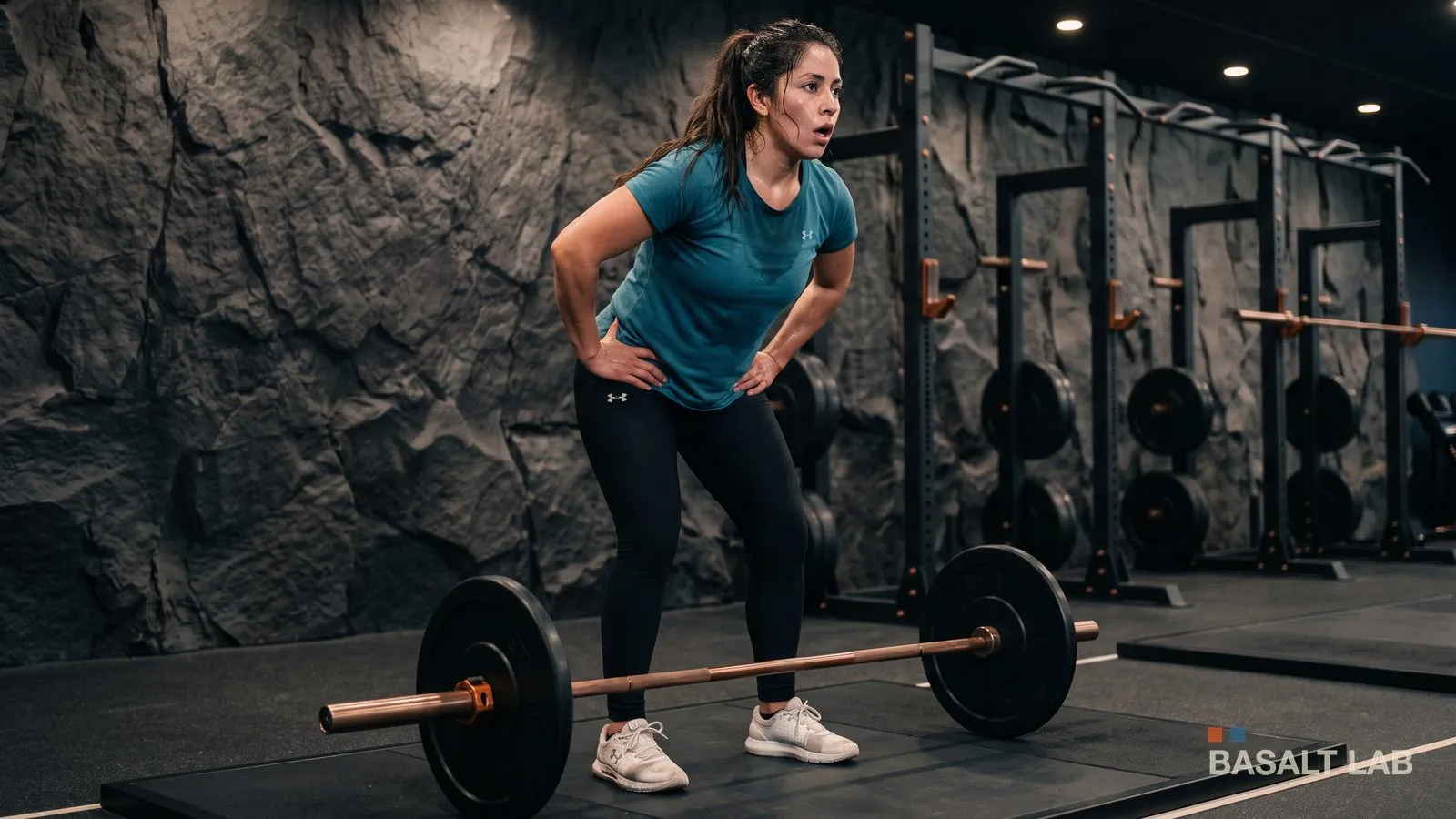
Rest two to five minutes between heavy sets on the big lifts (squat, bench press, deadlift), and at least a minute and a half to two minutes when muscle growth is the main goal. On isolation exercises, one to two minutes is usually enough. The right rest is the one that lets you repeat the next set with the same weight and nearly the same reps.
Rest is the variable people forget most, because programs rarely spell it out beyond the fine print. Yet it decides the quality of every set and the length of your session. The advice has also moved on: the idea that you need short rests to build muscle does not hold up against recent studies.
Why rest matters
Rest is there so the next set actually counts. Cut it too short and you get fewer reps with the same weight, or you have to drop the weight, and the total work of the session shrinks.
What recovers. During a heavy set, your muscles draw on fast energy stores that take a few minutes to rebuild. Your nervous system tires too on very heavy efforts. A 2009 review of 35 studies noted that with loads between 50% and 90% of max, three to five minutes of rest allowed more reps across all sets than one minute did.
What a short rest costs you. If you go from 8 reps on your first set to 5 on your third, the session carries less volume than planned. And volume, meaning the number of sets per muscle per week taken close enough to failure, is one of the main drivers of progress.
Rest for strength
To get stronger on the big lifts, rest more than two minutes, and up to three to five minutes on your heaviest sets. This is the most consistent finding in the research.
A 2018 systematic review covering 23 studies and 491 participants sums it up in three points. You already gain strength with short rests, under a minute. But in trained lifters, rests longer than two minutes seem necessary to maximize gains. And in beginners, one to two minutes is enough.
Why beginners get away with less. Early on, the weights are still modest and a single set does not take much out of you. The stronger you get, the more a heavy set costs, and the longer it takes to repeat it under the same conditions.
In practice. On a squat or deadlift for 3 to 5 reps, three minutes is a good starting point. If the next set comes out clearly worse, take four or five. Rest belongs to the program just as much as the weight on the bar.
Rest for muscle growth
To build muscle, rest at least a minute and a half to two minutes between sets. The very short one-minute rests long recommended for size appear slightly less effective.
The study that changed the rule. In 2016, 21 trained men followed the same program for eight weeks: three full body sessions a week, three sets of 8 to 12 reps on seven exercises. The only difference was one minute of rest for one group and three minutes for the other. The three-minute group gained more strength on the squat and bench press, and more muscle thickness at the front of the thigh.
What the body of research says. A 2024 meta-analysis pooled nine studies on the question. It found a small advantage for muscle growth when resting longer than 60 seconds, but no clear difference beyond 90 seconds. The authors stay cautious: the data are still limited and fairly scattered. They still conclude that the classic advice of short rests for hypertrophy deserves a second look.
In other words, resting longer does not cost you muscle, and resting too little costs you a bit of growth. Between a minute and a half and three minutes, the choice mostly comes down to the exercise and how much time you have.
Rest by exercise type
Rest depends less on your goal than on what the set costs you. A heavy squat and a set of curls do not tire you out the same way.
These ranges are ballpark figures consistent with the studies cited, not values measured for each exercise. They match the site's beginner full body program: two to three minutes on the big lifts, a minute to a minute and a half on everything else.
The simple test. If you lose more than two reps on the next set at the same weight, your rest was too short. If you feel ready well before the timer ends, you can trim it a little. Effort plays a part too: the closer you go to failure, with few reps in reserve, the more time you need.
Sticking to your rest times
Actual rest is almost always different from planned rest. You chat, check your phone, wait for a machine, and two minutes become five. Or the opposite: impatience makes you rush the next set.
Use a timer. A timer that buzzes at the end of the rest is more reliable than how you feel. Your watch does the job, and it is less distracting than keeping your eyes on a screen.
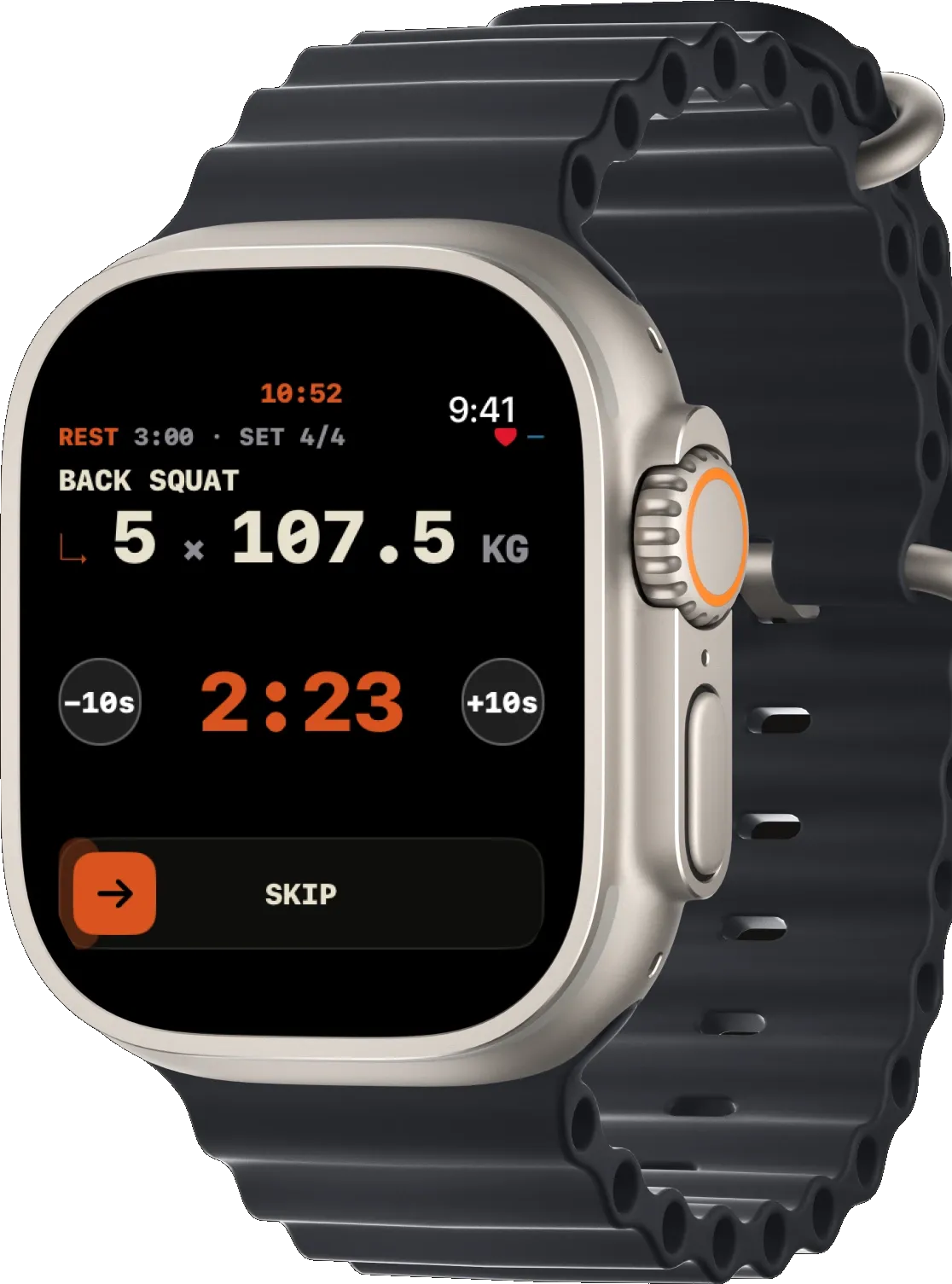
Count from the end of the set. Rest starts when you put the bar down, not when you have finished logging or changing plates.
Cut isolation, not the big lifts. If you are short on time, drop an isolation exercise or pair two exercises that do not work the same muscles, rather than trimming the rest on your squat.
Frequently asked questions
Is one minute of rest enough?
For light isolation exercises, often yes. For heavy sets on the big lifts, it is usually too short: in the 2016 study, one minute of rest led to less strength and less muscle than three minutes, on an identical program.
Does resting too long undo the work?
No. In the 2016 study, the group resting three minutes was the one that progressed most, and the 2024 meta-analysis found no loss of muscle growth with long rests. The only real cost of a long rest is the length of your session.
Should every set of an exercise get the same rest?
The simplest approach is to keep the same time from one set to the next, so you can compare one session with the next. Taking an extra minute before a very hard last set is fine, as long as you do it the same way every time.
What about between exercises?
Allow at least the rest of the next exercise, plus the time to set up. If you move from a leg exercise to an upper body one, you can cut it slightly, since different muscles are doing the work.
Good rest never shows up in the program, but it shows up in the numbers of your next set.
Sources
- Longer Interset Rest Periods Enhance Muscle Strength and Hypertrophy in Resistance-Trained Men, Schoenfeld, Pope, Benik et al., Journal of Strength and Conditioning Research, 2016.
- Effects of Rest Interval Duration in Resistance Training on Measures of Muscular Strength: A Systematic Review, Grgic, Schoenfeld, Skrepnik, Davies and Mikulic, Sports Medicine, 2018.
- Give it a rest: a systematic review with Bayesian meta-analysis on the effect of inter-set rest interval duration on muscle hypertrophy, Singer, Wolf, Generoso et al., Frontiers in Sports and Active Living, 2024.
- Rest interval between sets in strength training, de Salles, Simão, Miranda, Novaes, Lemos and Willardson, Sports Medicine, 2009.